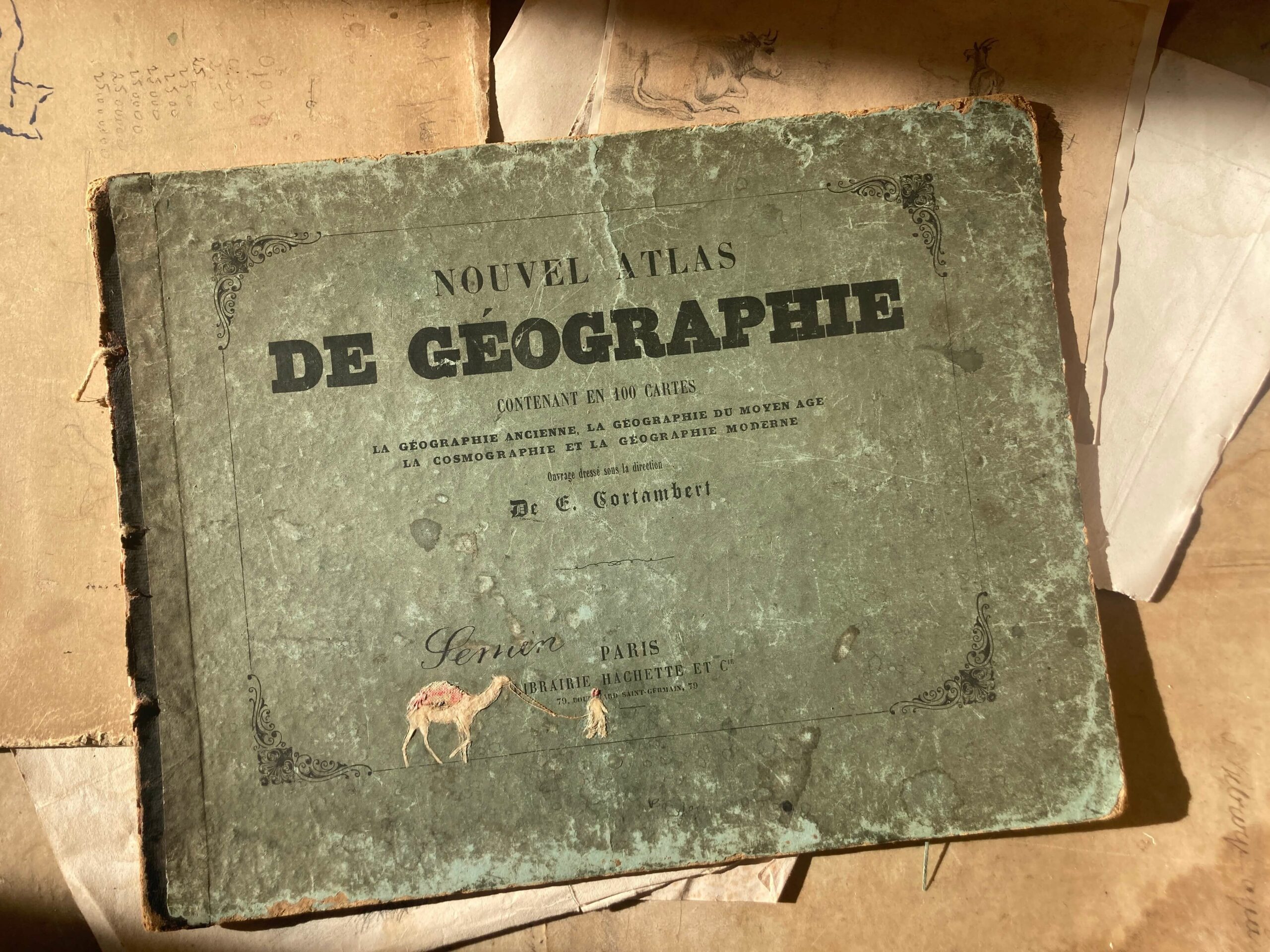
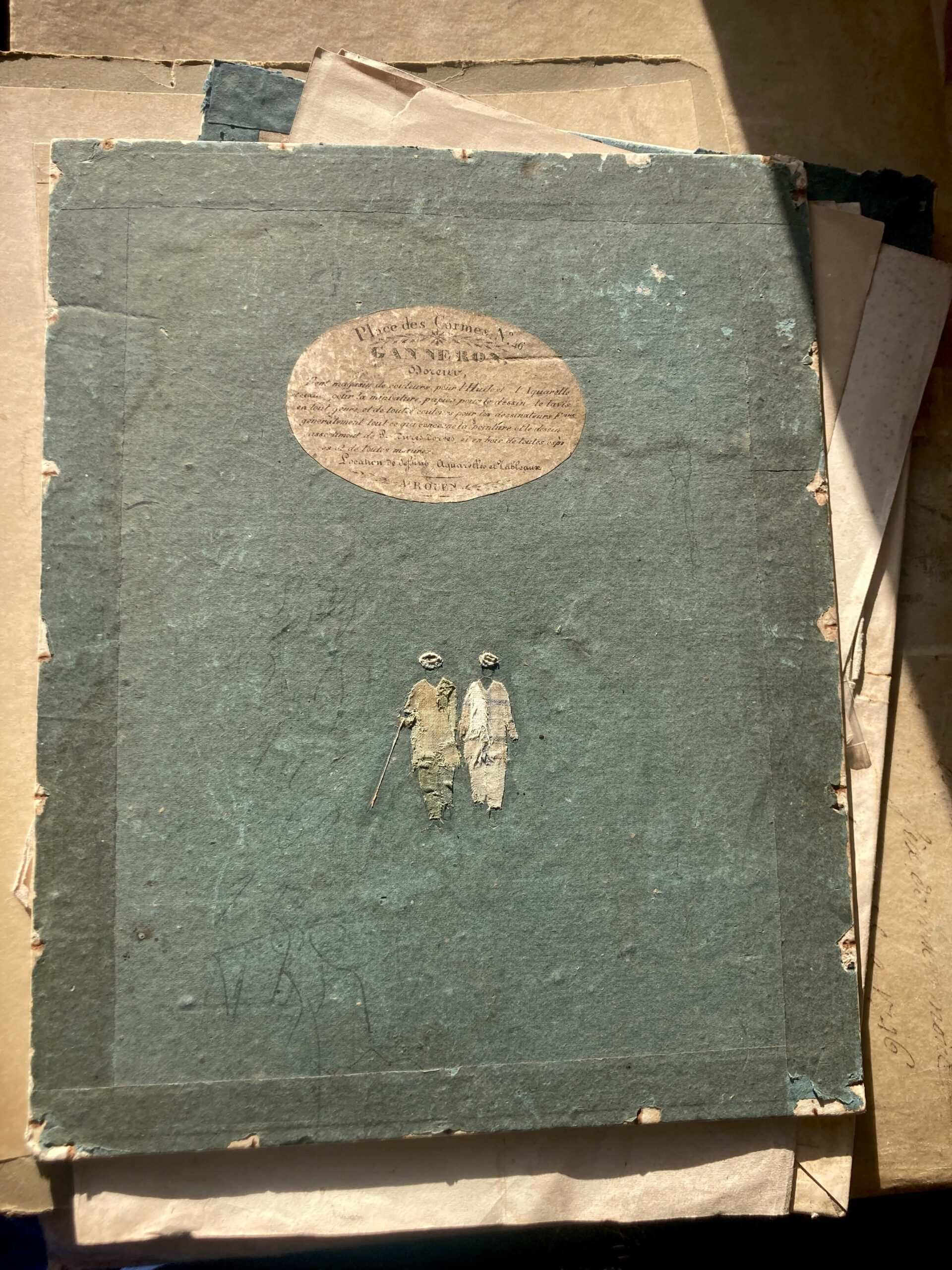
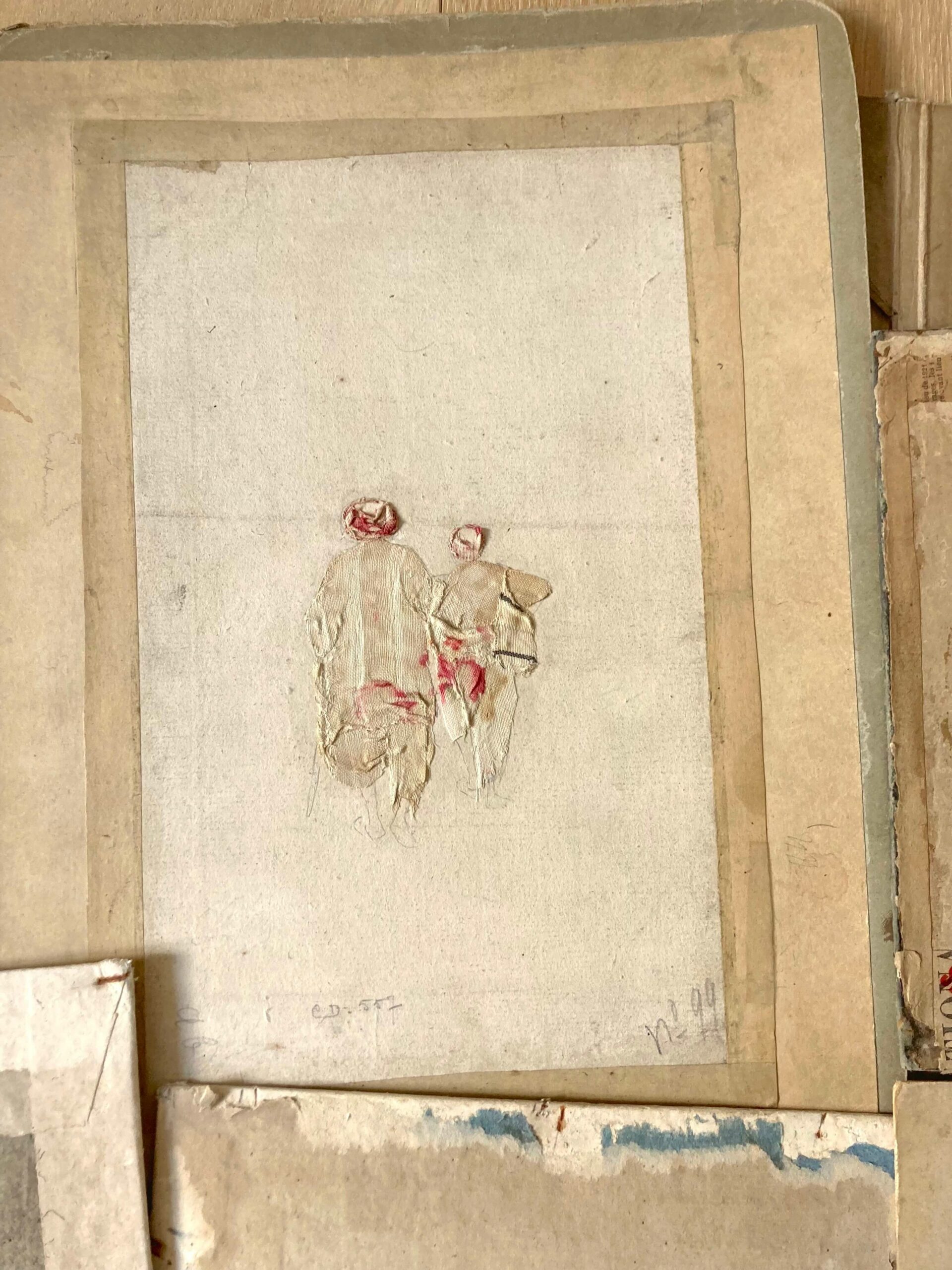
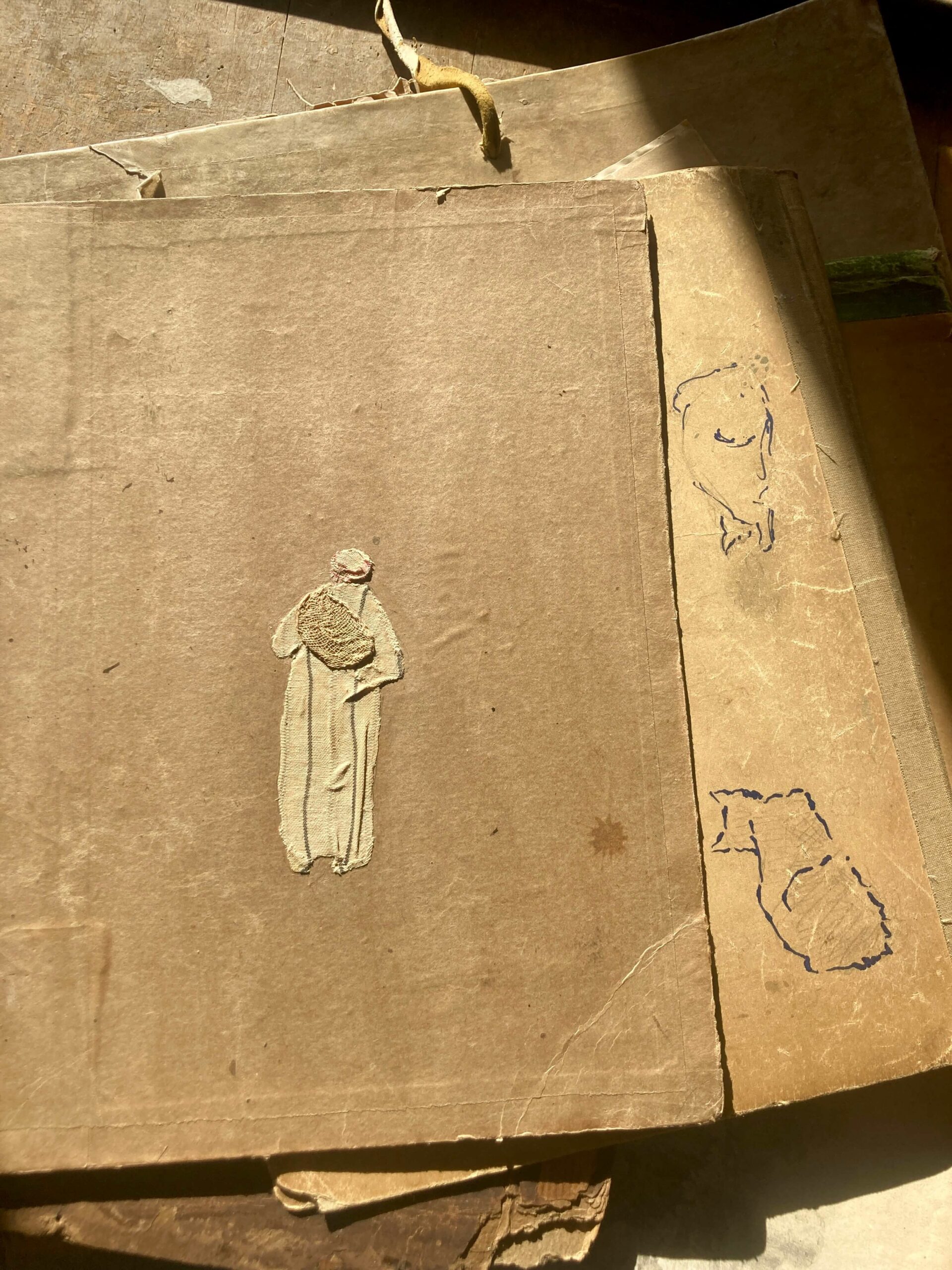
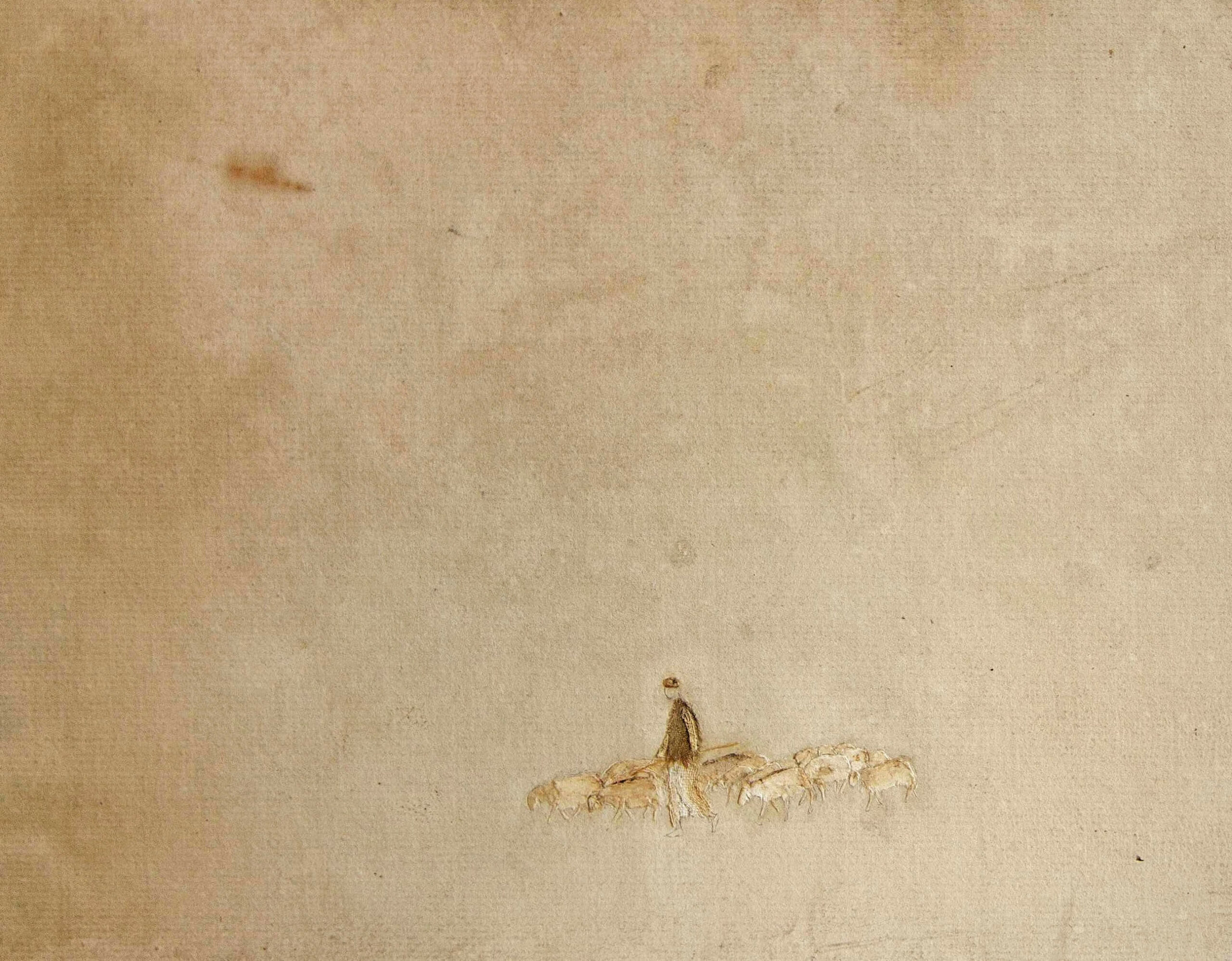
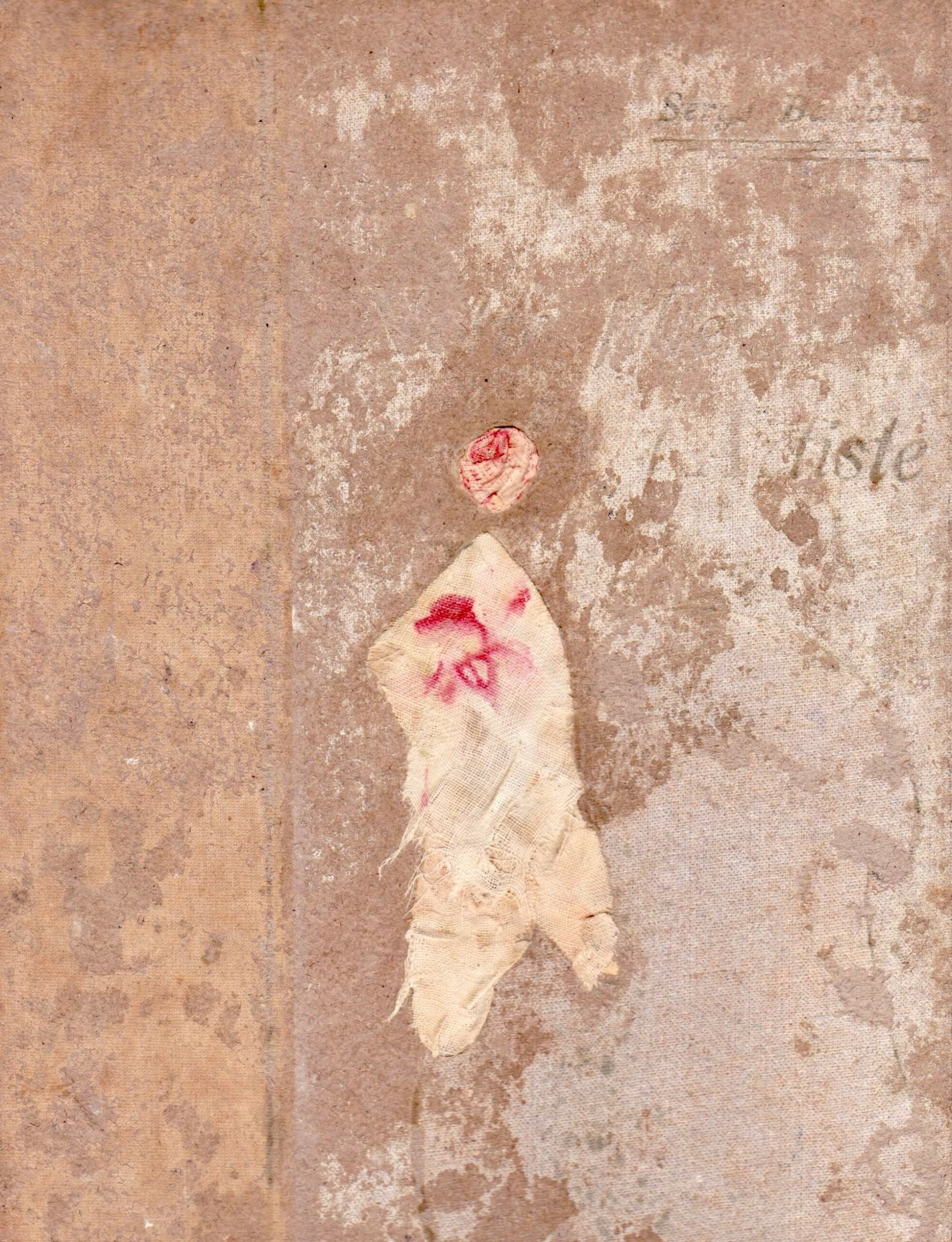
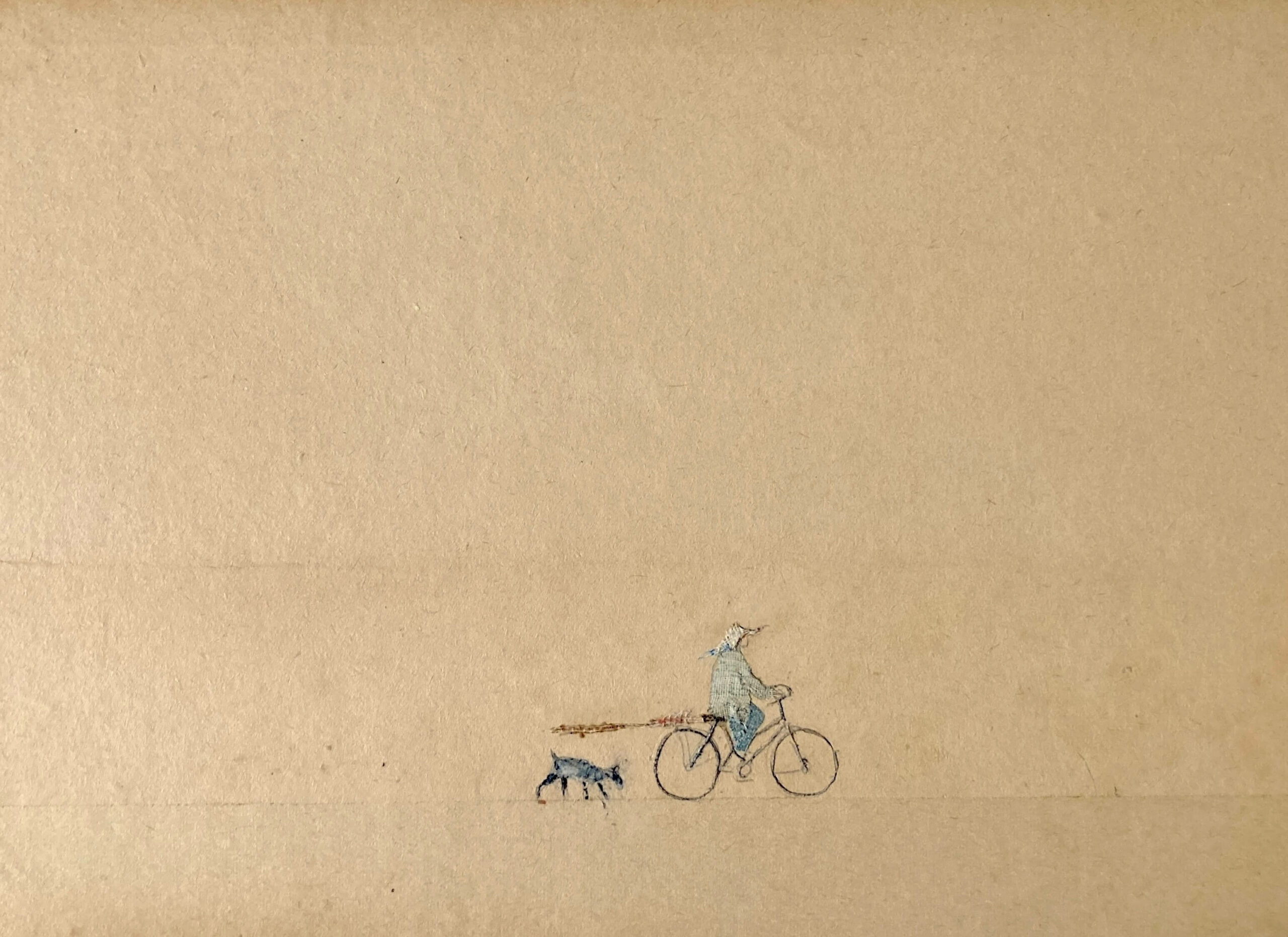
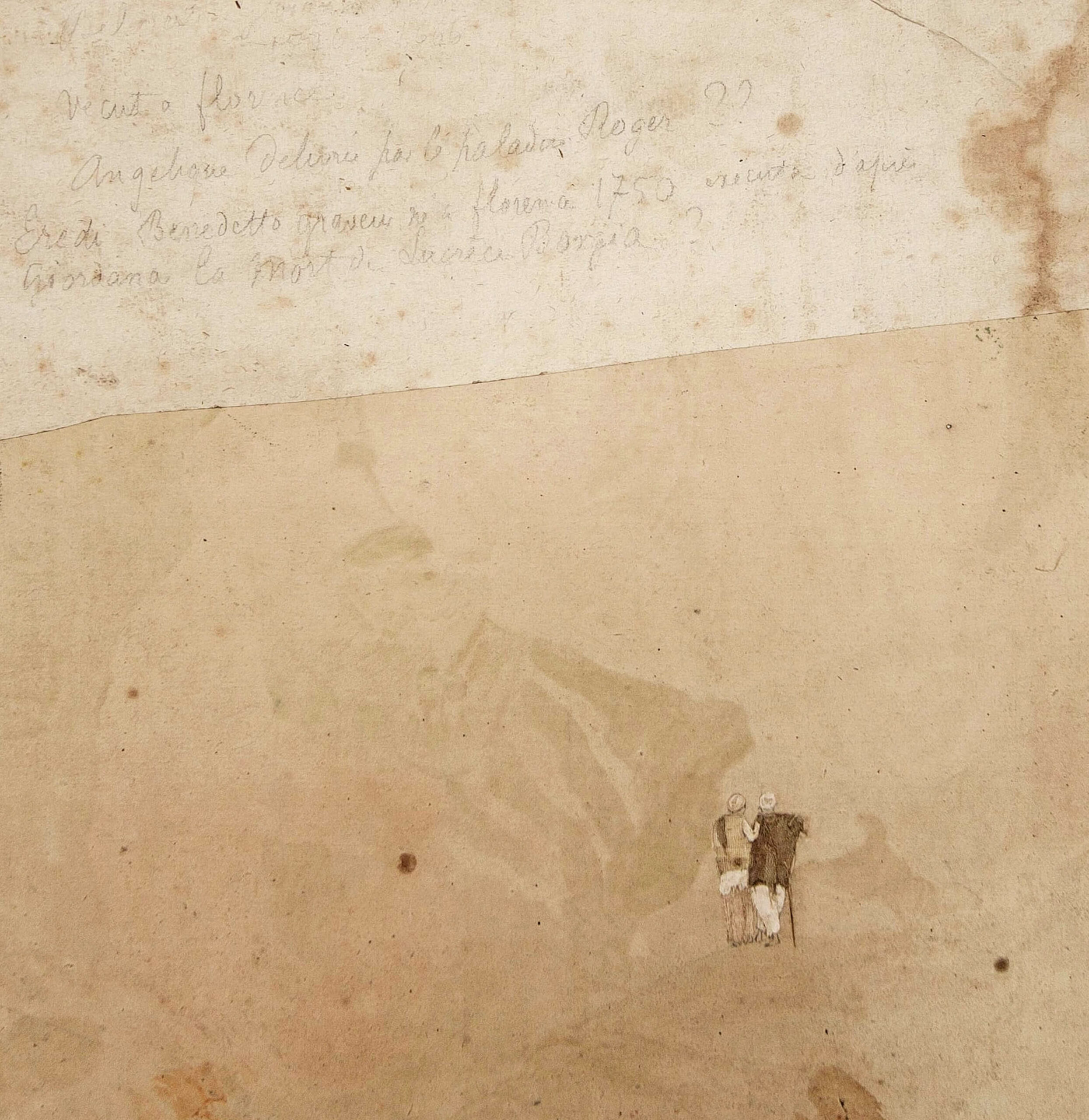
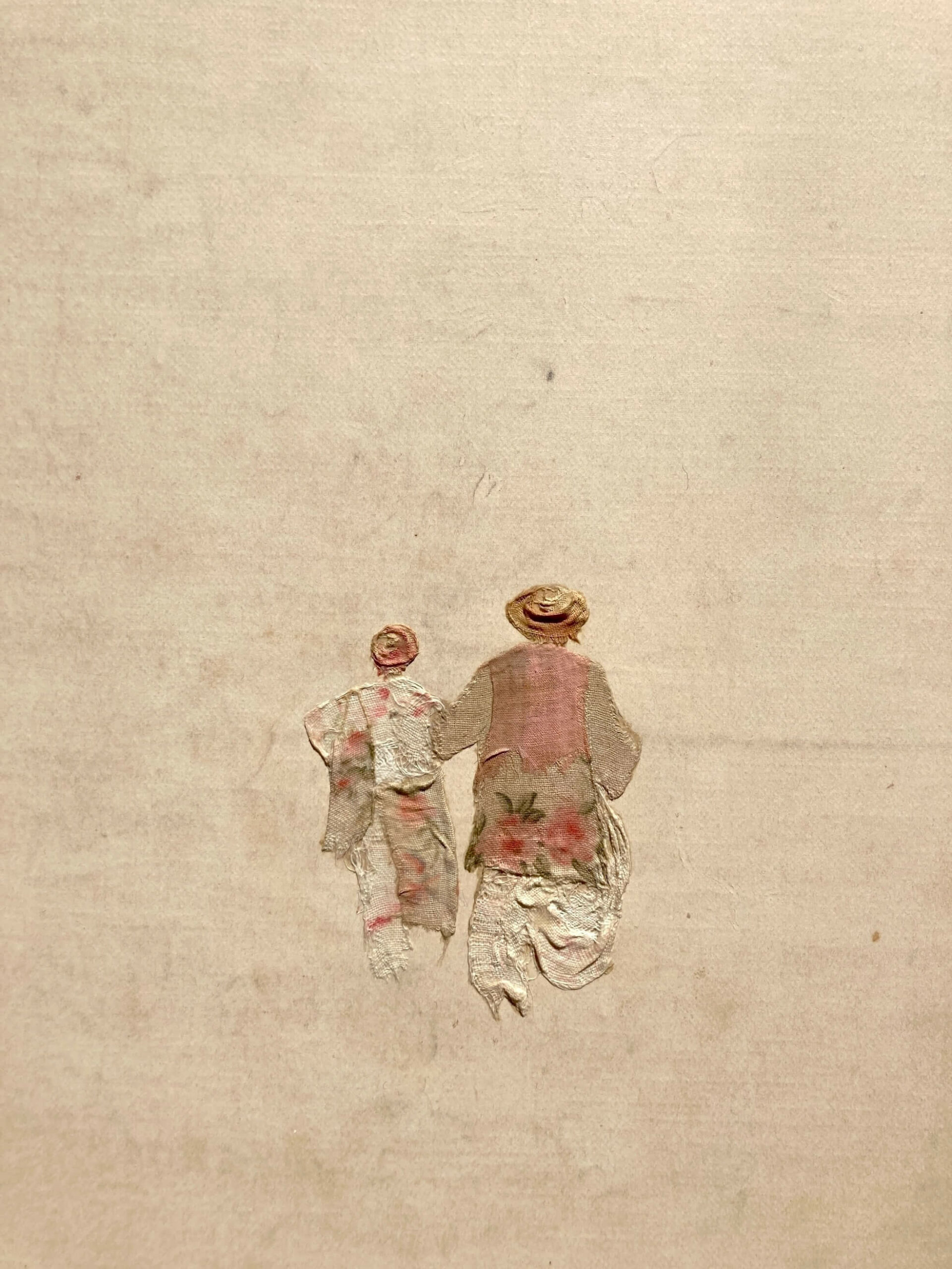
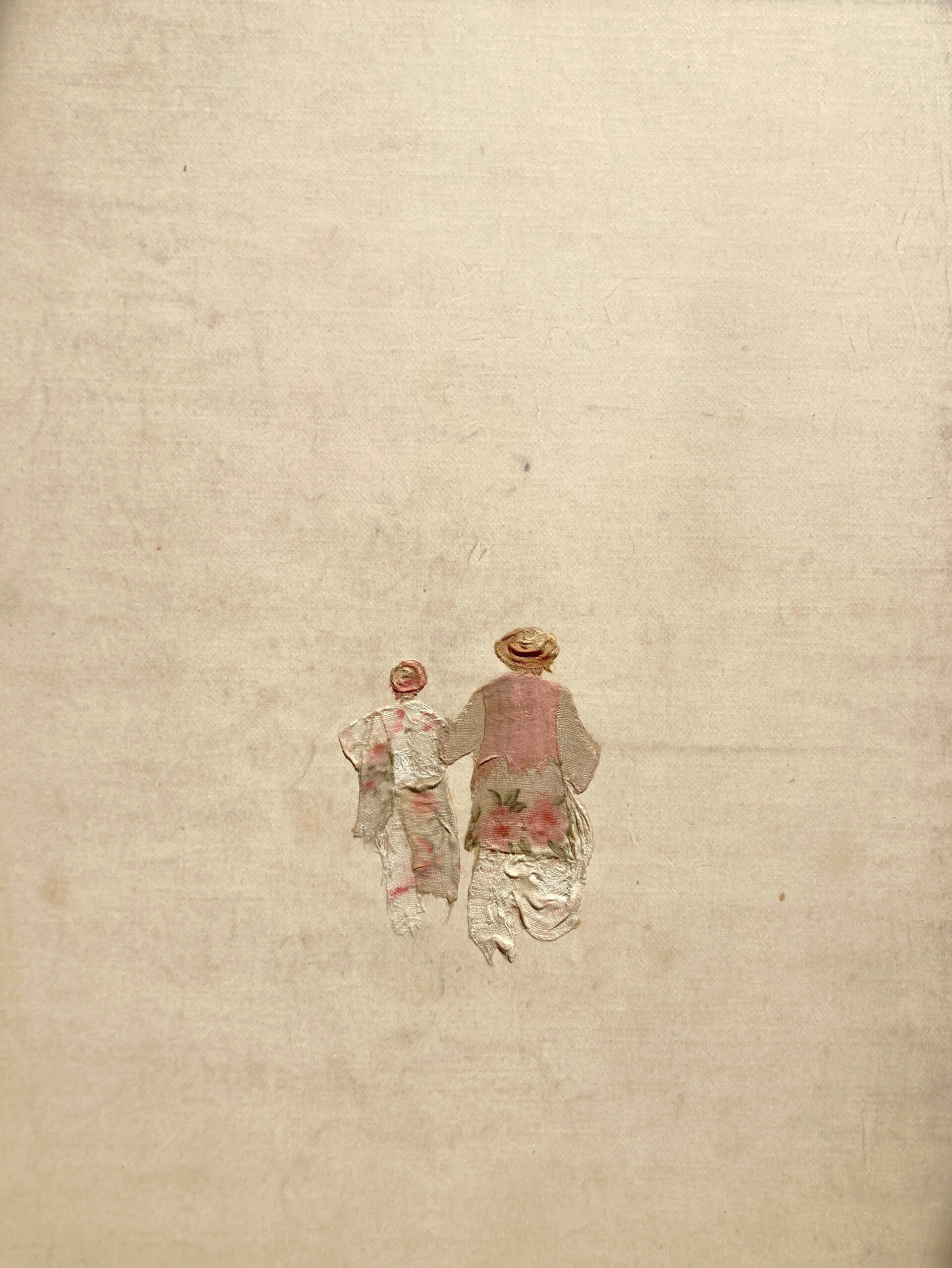
Like the classic Surrealists at the turn of the last century, Lamiel haunts flea markets, old bookshops and many attic sale, hoping for the right 'chance encounter'.
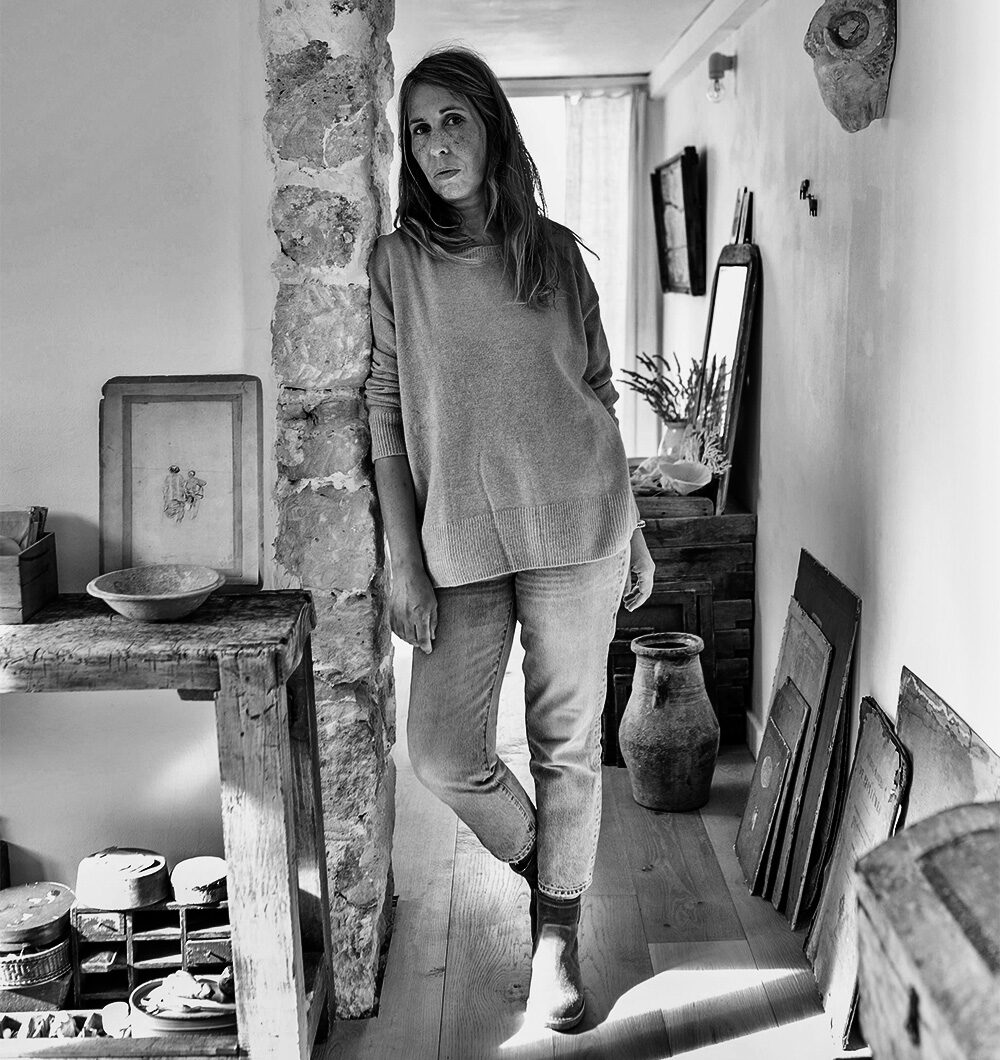
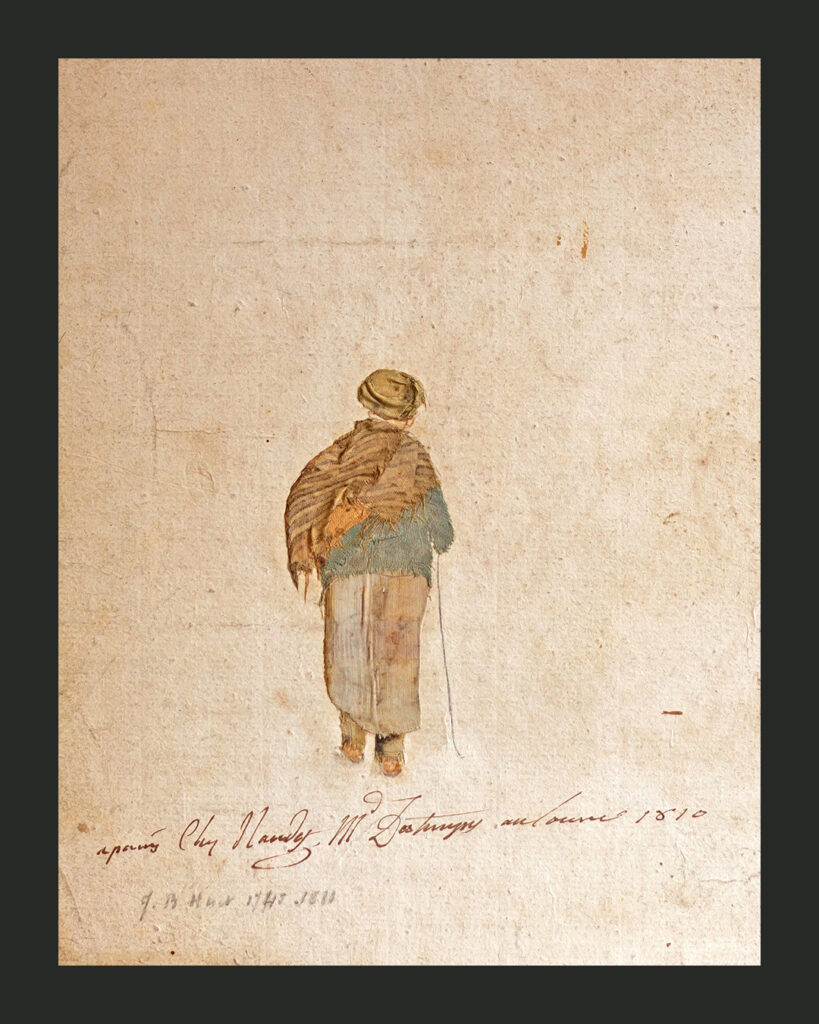
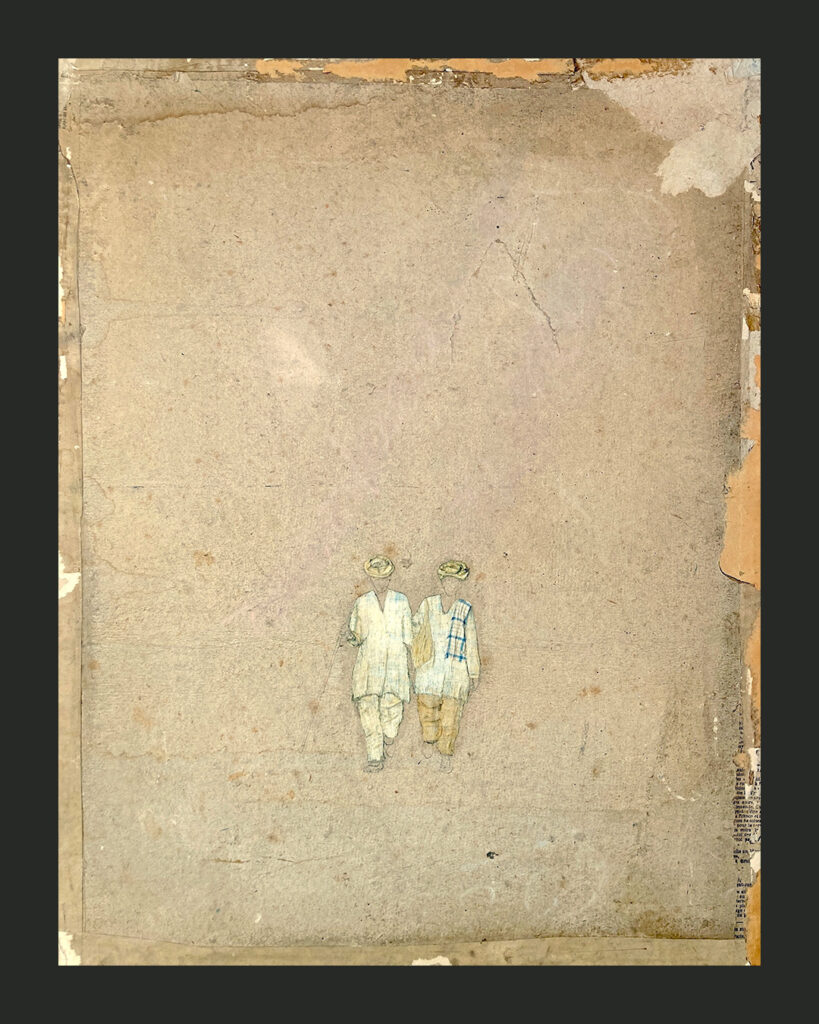
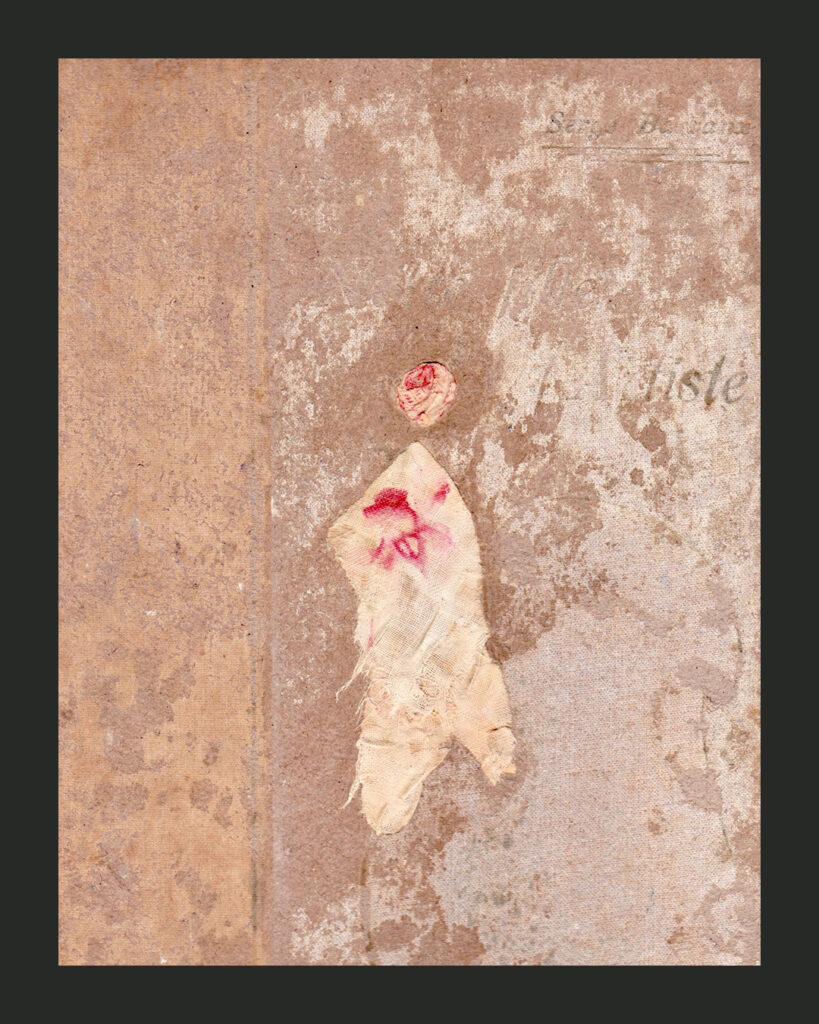
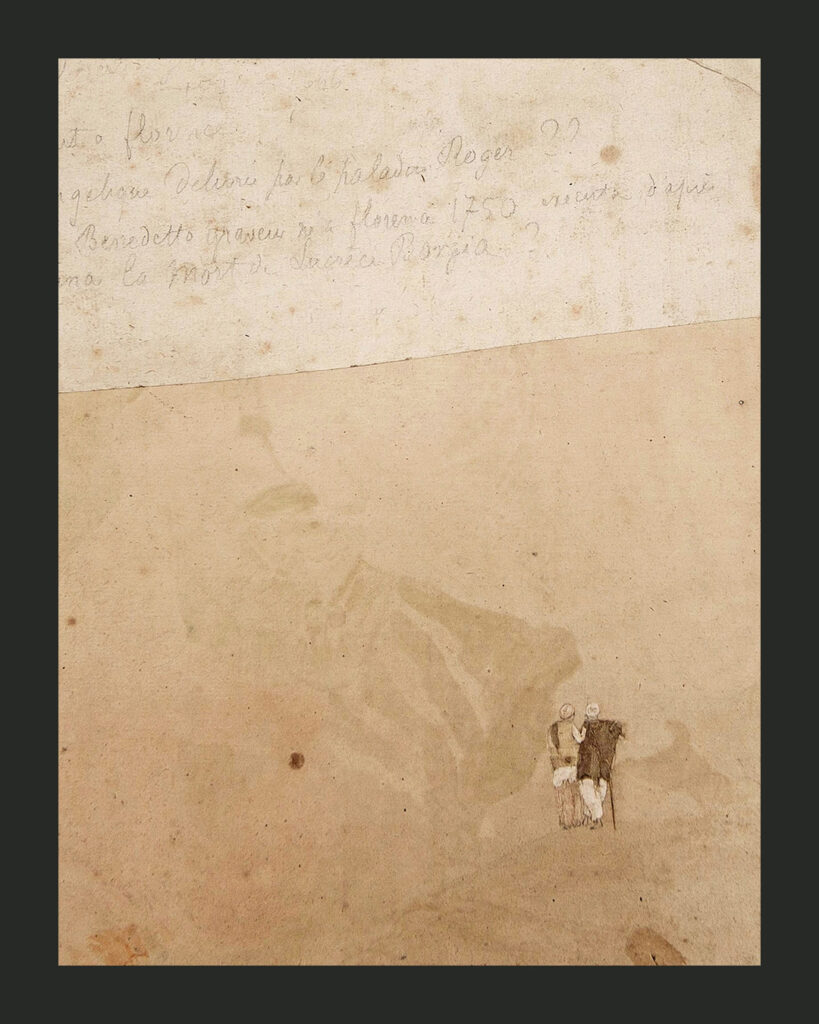
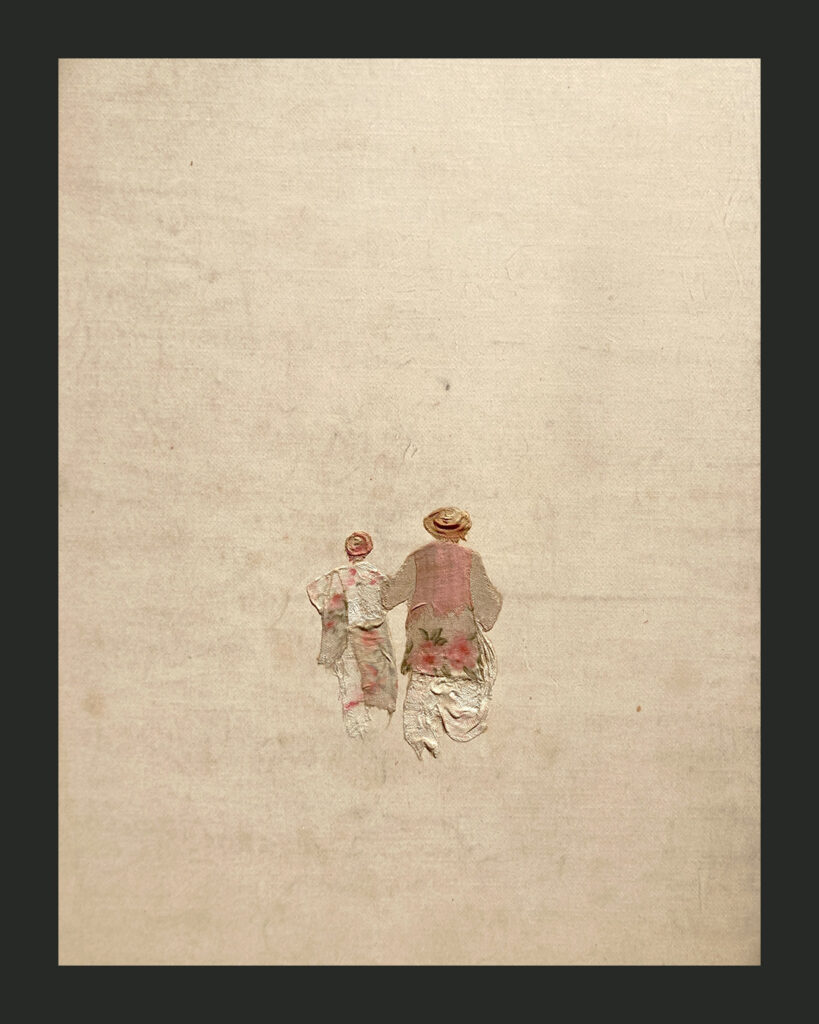
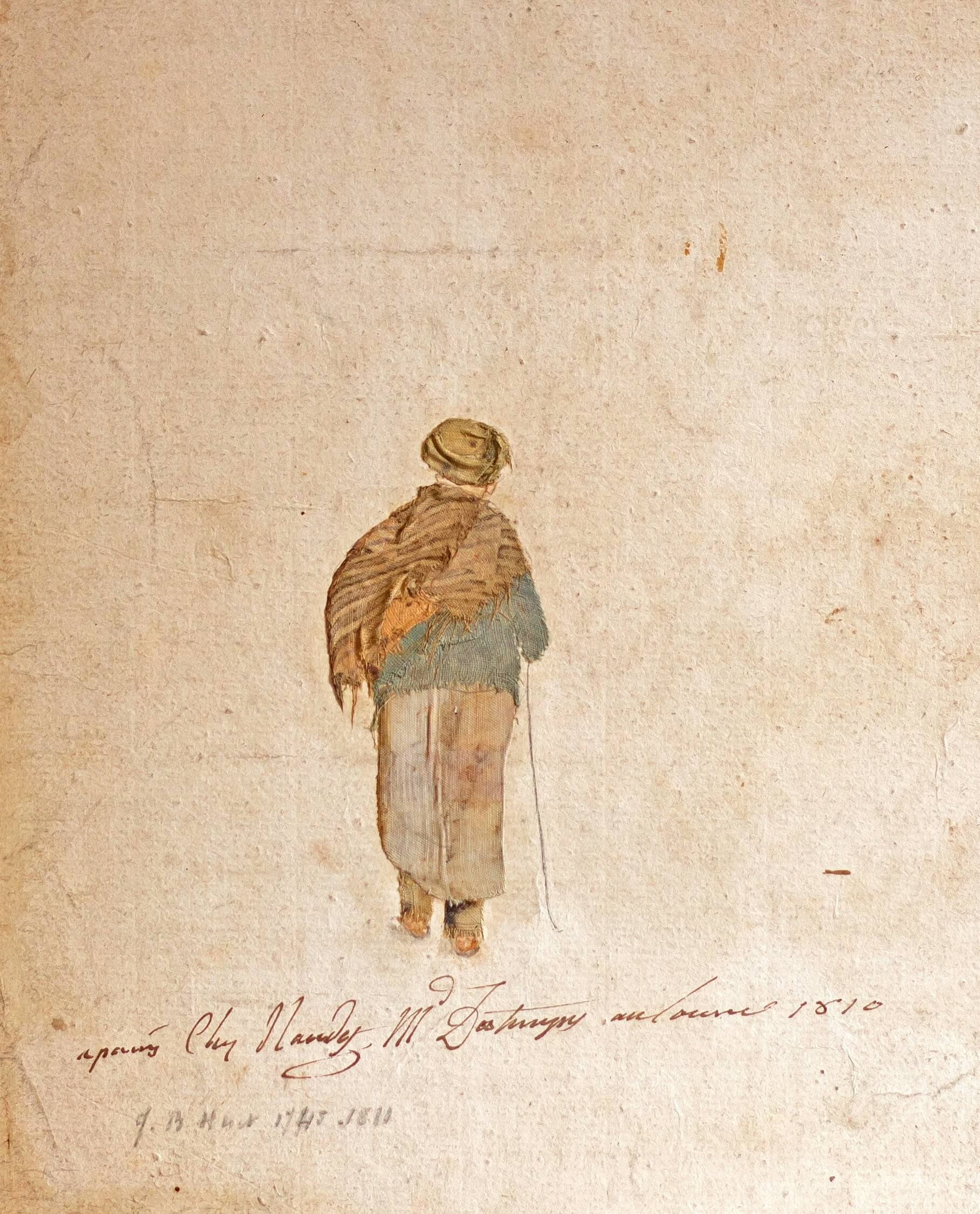
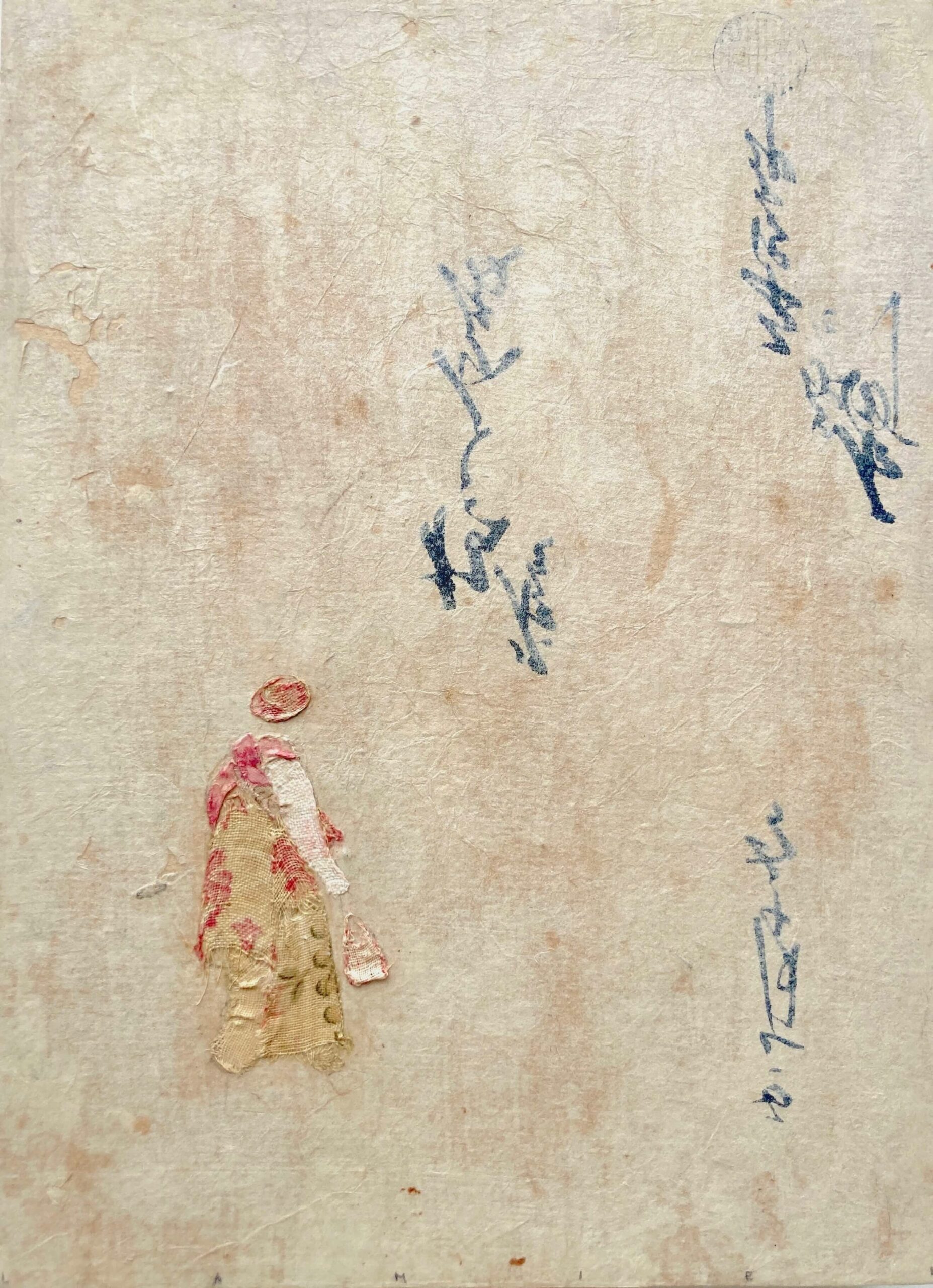
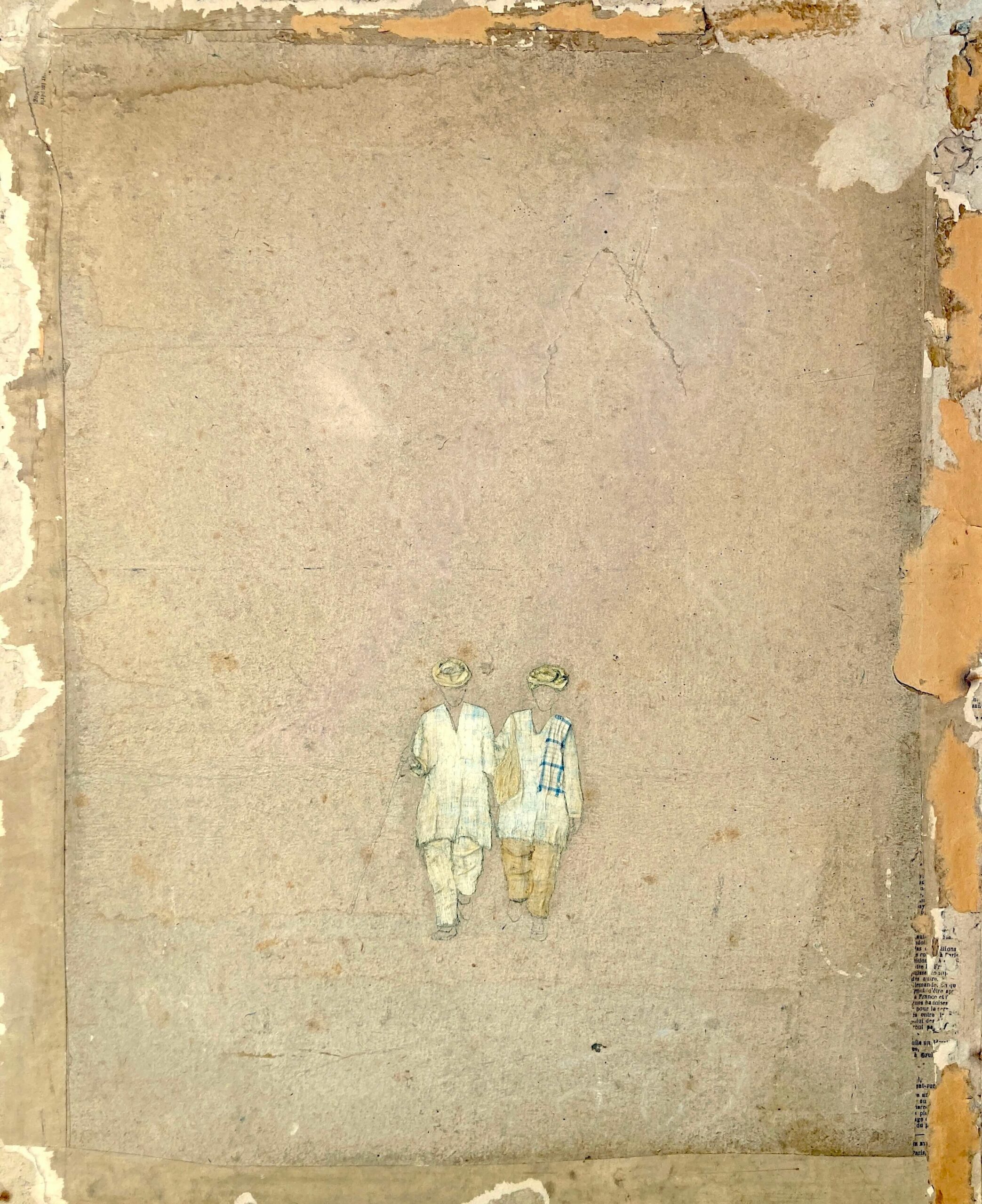
Born in Paris in 1976, Lamiel grew up with the conviction that art is a necessary, perhaps even vital language; more than a refuge, it is a way of being in the world. Self-taught, she explores gestures without a master or dogma, distancing herself from academic frameworks, preferring the freedom of unbridled, instinctive, and organic creation. Driven by the breath of the world and the call of cultures, Lamiel wanders through distant lands where poetry unfolds in the humble gestures of peasants, in the footsteps of nomads, in the raw brilliance of the bare earth. Her travels give rise to a visceral connection to materials: clay, first and foremost, in its mineral purity, offers her a first breath, an essential dialogue with the earth; then this relationship with the material is enriched: old papers and fabrics, patiently hunted down and collected, become fragments of silent stories that she assembles, repurposes, reveals, weaving between their fibers the thread of an intimate word. This work of assemblage gradually becomes her language of choice: a sensitive writing, where textures whisper forgotten memories. In her Parisian studio, Lamiel brings fragments of the past back to life: stained, yellowed papers, dotted with different shades and textures, old fabrics and books—these are her materials. What might have been considered dead material is then recovered to give it a new existence, a new lease of life, becoming veritable scrolls of life where past and present combine. These materials, bearers of memory, come together to form part of the artistic landscape in a work imbued with wisdom and subtlety. An archaeology of the senses is woven into the artist’s gesture: each piece of old paper becomes raw material and the starting point for a work that offers the viewer a meditation on time and the beauty of wear and tear. Under her fingers, the materials harmonize, listen to each other, and respond to each other: a stain opens a path, a tear a direction, a fold murmurs the horizon. By inviting us to slow down and linger over these delicately nuanced scenes, she offers— without words—a true lesson in philosophy.
SELECTION OF PIECES DISPLAYED FOR THE WABI-SABI I LAB
For any questions, please feel free to contact us: